

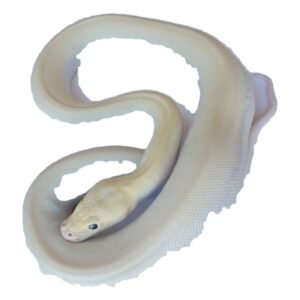
Milk snakes (Lampropeltis triangulum) are among the most colorful snakes in the hobby. Their bold red, black, and white or yellow banding is a classic look, and they stay a manageable size, which makes them a great choice for keepers who want a showpiece snake without a giant enclosure. This Albino Milk Snake Sub Adult is a healthy sub adult, past the delicate baby stage and already feeding well.
Milk snakes are shy at first but usually tolerate handling well with patience. They live 20 years or more, so this is a long-term companion.
Quick facts
- This animal: Male / Female
- Lifespan: 20+ years
- Adult size: most are 120 cm (48 in) or smaller. Many stay around 90–115 cm.
- Temperament: generally calm and tolerates handling well after settling in
Diet
- Whole prey only: mice, small rats, or quail. Frozen-thawed is safest.
- Prey should be no wider than 1.5 times the snake’s widest point.
- Feeding frequency: hatchlings every 5–7 days, juveniles and sub adults every 7–10 days, adults every 10–14 days.
- Fresh water always, in a bowl large enough to soak in.
- Keep one snake per enclosure. Milk snakes can eat other snakes.
Habitat and enclosure size
- Adult minimum: 120 x 60 x 60 cm (48 x 24 x 24 in). Bigger is always better.
- A sub adult can start in a smaller secure enclosure, such as 90 x 45 x 45 cm, but plan to upgrade.
- Substrate about 10 cm deep (coconut fiber, aspen, or a soil mix), with a warm hide, a cool hide, and a humid hide with moist sphagnum moss.
- Use a secure, locked lid. Milk snakes are good escape artists.
Temperature and humidity
- Basking surface: 29–32°C (85–90°F)
- Cool side: 23–27°C (75–80°F)
- Night: 21–23°C (70–75°F)
- Humidity: 40–60%, higher in the humid hide
Best lighting and heating
- Heat: a 50W halogen flood bulb (one or two, depending on enclosure size). Turn it off at night; use a ceramic heat emitter or radiant panel on a thermostat only if the room gets cold.
- UVB (recommended): a T5 HO 5.0 / 6% tube across about half the enclosure on the warm side, aiming for UV index 2–3 at the basking spot.
- Photoperiod: about 12 hours a day, longer in summer and shorter in winter. A 6500K LED strip helps with general lighting.
Give a new snake about two weeks to settle in and wait until it is feeding regularly before handling. Start with short sessions.

Reviews
There are no reviews yet.