
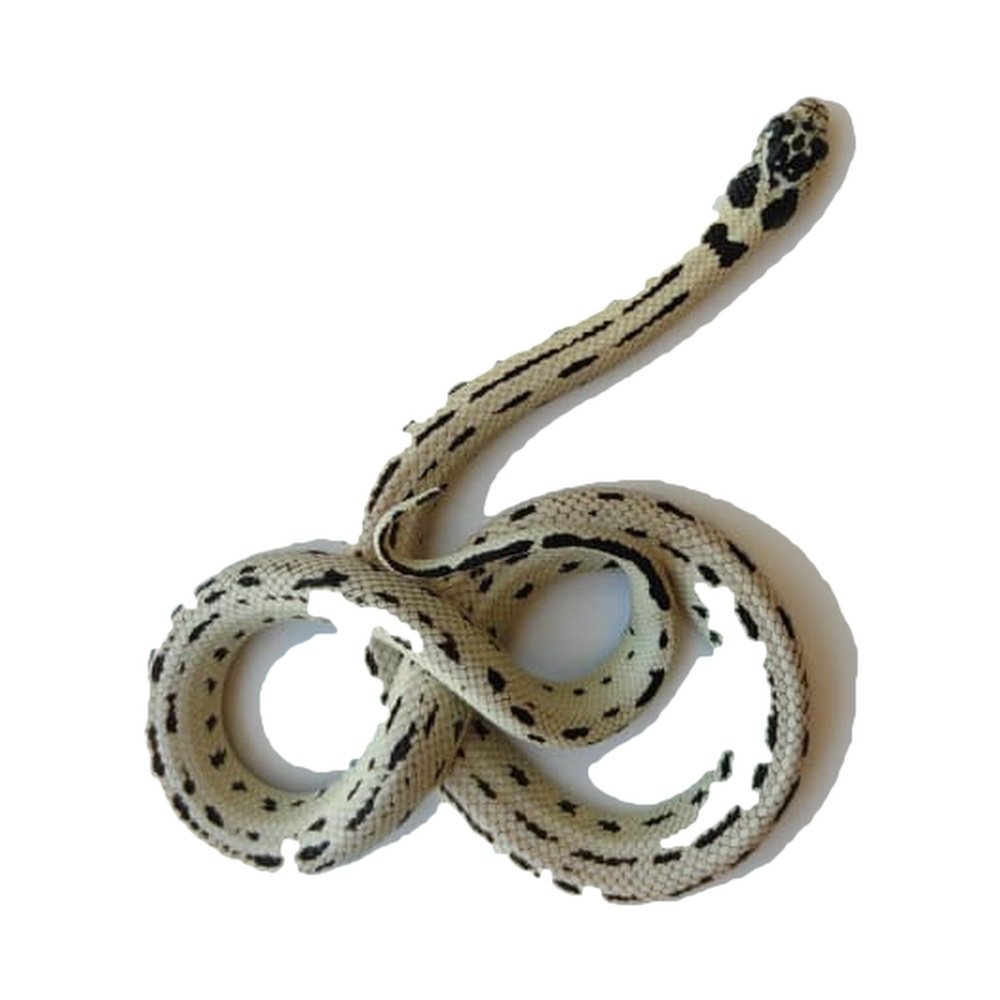
The California kingsnake (Lampropeltis californiae) is one of the most popular pet snakes in the world, and for good reason. It is hardy, easy to feed, and does not need a huge setup. The high white morph has a bright white body with clean dark markings, a look that really pops against dark decor.
This is a great snake for first-time keepers and experienced keepers alike. It can live over 20 years, so choose it as a long-term companion.
Quick facts
- This animal: Female – 50 cm
- Lifespan: often 20+ years
- Adult size: average 90–120 cm (3–4 ft); some grow larger
- Temperament: a new snake may shake its tail or strike at first. With gentle, regular handling it usually settles down.
Diet
- Whole rodents, mostly mice. Frozen-thawed or freshly killed is safest. Live mice can injure the snake.
- Feeding frequency: hatchlings and juveniles weekly (more often for faster growth), adults about once a week or less to avoid obesity.
- Do not handle until the meal is digested.
- Offer a deep water bowl, kept about half full.
- Do not house kingsnakes together. They can eat other snakes.
Habitat and enclosure size
- Hatchling: a small secure box or tub for the first months.
- Adult: at least a 50 gallon terrarium, ideally 120 x 60 x 60 cm (4 x 2 x 2 ft).
- Substrate: aspen, cypress mulch, or coconut fiber. Keep it dry.
- Provide a hide on the warm side and one on the cool side.
- Use a locked lid. Kingsnakes escape easily.
Temperature and humidity
- Warm end: about 29°C (85°F)
- Cool end: 21–26°C (70s°F)
- Humidity: keep the enclosure dry, with a dry substrate. Reduce water if the cage gets damp.
Best lighting and heating
- Heat: a heat lamp or heat mat on one end of the enclosure, always controlled by a thermostat. Never use hot rocks, which can burn.
- UVB (optional but beneficial): a low-output UVB tube over part of the enclosure, with a basking UV index of about 1–3.
- Photoperiod: natural room light, or 10–12 hours on a timer. Keep it out of direct sun through a window.
Avoid handling while the snake is shedding (cloudy or bluish eyes). Handle gently, hand over hand, and avoid the head.
Reviews
There are no reviews yet.